
National Nutrition Week:
When Hormones, Nutrition and Sleep Intersect
PMOS, Nutrition & Sleep Apnea:
The Metabolic Connection We Shouldn’t Ignore
National Nutrition Week | September 1–7
We usually associate nutrition with body weight, diabetes, cholesterol or digestive health.
When we think of hormonal disorders in women, we usually think of menstrual irregularities, fertility concerns and reproductive health. Sleep disturbances, however, are often overlooked.
And when someone snores, it is often dismissed as merely a nighttime nuisance.
But the human body does not function in isolated compartments.
Nutrition influences metabolism. Metabolism influences hormones. Hormones influence fat distribution and insulin sensitivity. Sleep influences glucose regulation and appetite. And disturbed breathing during sleep can further disturb the same metabolic pathways we are trying to correct.
One condition that illustrates this interaction remarkably well is ----
Polyendocrine Metabolic Ovarian Syndrome (PMOS).
AN IMPORTANT CHANGE: PCOS IS NOW PMOS
Many readers will recognise this condition by its former name, Polycystic Ovary Syndrome (PCOS).
In May 2026, following an international consensus process involving more than 50 patient and professional organisations, the condition was renamed:
Polyendocrine Metabolic Ovarian Syndrome — PMOS
The change is meaningful.
The older terminology could create the impression that this was primarily an ovarian condition characterised by “cysts.”
PMOS more accurately communicates something clinicians have understood increasingly well:

this is a complex, lifelong endocrine-metabolic condition—not simply an ovarian disorder.
It can involve reproductive hormones, insulin signalling, glucose metabolism, adipose tissue, cardiovascular risk, psychological health and other physiological systems.
And there is another important association that deserves considerably greater public awareness:
Obstructive Sleep Apnea (OSA).
To understand the relationship between PMOS, nutrition, obesity and sleep apnea, we first need to understand insulin resistance
THE BIOCHEMISTRY BEHIND PMOS: WHY INSULIN MATTERS
After we eat carbohydrates, they are digested into glucose, which enters the bloodstream.
Rising blood glucose stimulates pancreatic beta cells to release insulin.
Think of insulin as a metabolic signal telling tissues:
“Glucose is available. Allow it to enter the cell and use or store it.”
At the cellular level, however, the process is considerably more sophisticated.
Insulin binds to the insulin receptor (INSR) on the cell membrane.
This activates intracellular signalling involving:
IRS proteins → PI3K → AKT
One important downstream consequence is movement of the glucose transporter GLUT4 toward the cell membrane, particularly in skeletal muscle and adipose tissue.
GLUT4 then facilitates glucose entry into the cell.
In simplified form:
Food → Glucose ↑ → Insulin ↑ → Insulin receptor → IRS → PI3K → AKT → GLUT4 translocation → Glucose enters cell
This is normal insulin signalling.
WHAT HAPPENS IN INSULIN RESISTANCE?

In insulin resistance, tissues become less responsive to insulin's metabolic signal.
The pancreas initially compensates by producing more insulin.
Consequently, a person can have relatively acceptable blood glucose while simultaneously maintaining abnormally high insulin concentrations.
This is compensatory hyperinsulinaemia.
Eventually, however, the pancreatic beta cells may no longer compensate adequately.
The progression can therefore resemble:
how insulin resistance can progressively strain glucose control:
Insulin resistance
↓
Compensatory hyperinsulinaemia
↓
Increasing metabolic stress
↓
Impaired glucose tolerance
↓
Prediabetes
↓
Type 2 diabetes in susceptible individuals
Initially, the pancreas compensates for insulin resistance by producing more insulin. Over time, persistent metabolic stress may overwhelm this compensation, allowing blood glucose to rise from impaired glucose tolerance to prediabetes and, in susceptible individuals, type 2 diabetes.
This progression is neither inevitable nor identical in every patient, but it explains why looking only at fasting glucose can sometimes fail to reveal the complete metabolic picture.

WHY IS HYPERINSULINAEMIA PARTICULARLY IMPORTANT IN PMOS?
Insulin is not merely a blood-sugar hormone.
It interacts with the endocrine system.
In PMOS, hyperinsulinaemia can stimulate ovarian androgen production and can reduce hepatic production of sex hormone-binding globulin (SHBG).
Lower SHBG can increase the biologically available fraction of circulating androgens.
This can contribute to the endocrine manifestations of PMOS.

We therefore begin to see a biochemical feedback loop:
Insulin Resistance → Hyperinsulinaemia → Increased Androgen Activity → Further Metabolic Dysfunction
And adipose tissue can amplify this process.
FAT IS NOT SIMPLY ENERGY STORAGE
For many years, adipose tissue was viewed largely as a passive storage depot for excess calories.
We now know that this is incorrect.
Adipose tissue is an active endocrine organ.
It produces signalling molecules known as adipokines and participates in inflammation, insulin sensitivity, lipid metabolism and energy regulation.
Among the molecules involved are:
Adiponectin
Leptin
Tumour necrosis factor-alpha (TNF-α)
Interleukin-6 (IL-6)
Other inflammatory mediators.
Adiponectin generally has insulin-sensitising and anti-inflammatory actions.
With adipose-tissue dysfunction and increasing visceral adiposity, adiponectin can decrease while pro-inflammatory signalling increases.
Meanwhile, insulin resistance in adipose tissue facilitates increased release of free fatty acids.
These fatty acids can reach the liver and skeletal muscle.
Ectopic lipid accumulation can then further interfere with insulin signalling.
This phenomenon—sometimes described in the context of lipotoxicity—can further amplify insulin resistance.
We now have another cycle:
Adipose dysfunction→ Free fatty acids ↑→ Liver & muscle lipid accumulation→ Insulin signalling worsens→ Insulin resistance ↑→ Hyperinsulinaemia ↑
This is why obesity should not be understood simply as “excess body weight.”
Where fat is deposited and how metabolically dysfunctional that adipose tissue becomes may be more important than the number displayed on the weighing scale alone.

NOW ADD OBESITY TO THE EQUATION
Obesity can intensify many of these pathways, although an important point must be made:
PMOS is not simply a consequence of obesity, and a woman does not need to have obesity to have PMOS.
Likewise, sleep apnea can occur in people who are not obese.
Nevertheless, in susceptible individuals, central and visceral adiposity can significantly increase metabolic risk.
It can also influence breathing.
Fat deposition around the neck, tongue and upper-airway structures and abdomen can contribute to anatomical airway narrowing.
Central abdominal adiposity can alter respiratory mechanics and reduce functional lung volumes.
When the individual falls asleep, physiological reduction in upper-airway muscle tone makes a vulnerable airway more susceptible to narrowing or collapse.
This brings us to the important PMOS–sleep connection.
PMOS AND OBSTRUCTIVE SLEEP APNEA
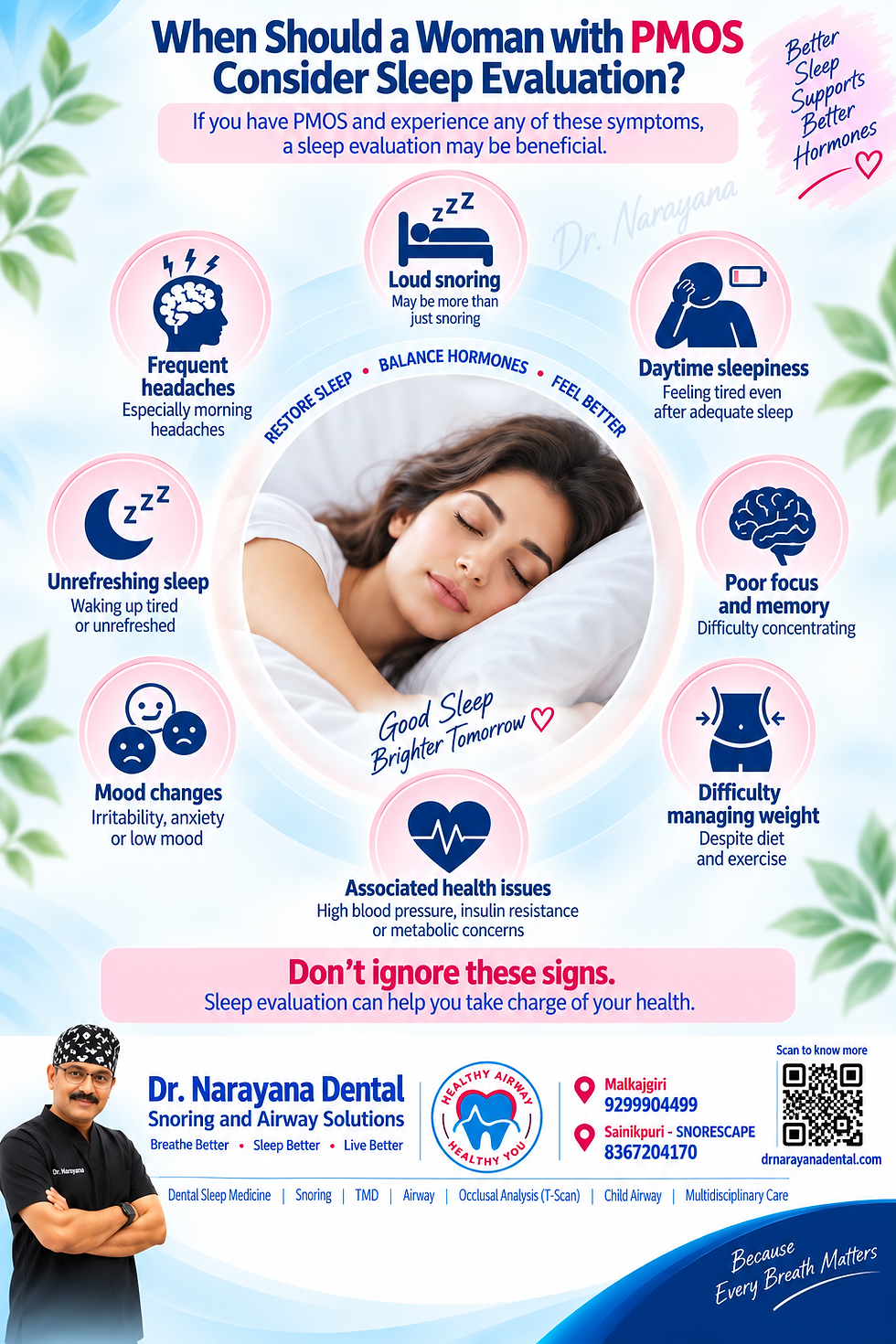
The international evidence-based guideline specifically recognises that women with PMOS have a significantly higher prevalence of obstructive sleep apnea than women without the condition.
Importantly, this association cannot simply be dismissed as an effect of BMI.
A recent systematic review and meta-analysis found a substantially higher prevalence of OSA in studied PMOS populations than controls, although the precise prevalence varies considerably between populations and study methodology.
So why might these two conditions be connected?
The answer probably involves several overlapping mechanisms:
Insulin resistance
Hyperinsulinaemia
Hyperandrogenism
Adipose dysfunction
Central adiposity
Inflammation
Upper-airway anatomical susceptibility
Sleep fragmentation
And then OSA itself can feed back into the metabolic problem.

WHAT ACTUALLY HAPPENS DURING OBSTRUCTIVE SLEEP APNEA?
During an obstructive apnea,
Airflow stops or markedly decreases despite continuing respiratory effort.
Blood oxygen can fall.
Carbon dioxide can rise.
The brain recognises the physiological threat and generates an arousal sufficient to restore airway tone and ventilation.
The patient usually does not consciously remember these repeated arousals.
The sequence may occur repeatedly:
Airway obstruction→ Oxygen falls→ CO₂ rises→ Respiratory effort increases→ Brain arousal→ Airway reopens→ Oxygen rises again→ Patient returns to sleep→ Airway obstructs again
In some patients this happens many times every hour.
The consequence is not simply “poor sleep.”
The body is repeatedly exposed to hypoxia followed by reoxygenation.
Biochemically, that matters.
INTERMITTENT HYPOXIA:
WHERE SLEEP APNEA BECOMES A METABOLIC PROBLEM

Repeated hypoxia–reoxygenation can promote formation of reactive oxygen species (ROS).
Excess ROS contributes to oxidative stress.
Oxidative stress can activate inflammatory pathways and contribute to endothelial and metabolic dysfunction.
At the same time, recurrent arousals activate the sympathetic nervous system.
Catecholamine activity increases.
This encourages:
Hepatic glucose output
Lipolysis
Increased circulating free fatty acids
Cardiovascular stress
Impaired insulin sensitivity.
OSA can therefore create an environment characterised by:
Intermittent Hypoxia + Sleep Fragmentation + Sympathetic Activation + Oxidative Stress + Inflammation

And what can these processes contribute to?
Insulin resistance.
Now the metabolic connection becomes particularly important.
PMOS may already involve insulin resistance.
OSA may independently produce physiological mechanisms capable of aggravating insulin resistance.
Thus, in a patient with both disorders, we may potentially see:
PMOS → Insulin Resistance → OSA susceptibility → Intermittent Hypoxia → Further Insulin Resistance
That is the vicious cycle clinicians should recognise.

AND THERE IS ANOTHER CONNECTION
SLEEP, HUNGER AND FOOD BEHAVIOUR
Poor sleep does not occur independently of nutritional behaviour.
Sleep restriction and sleep fragmentation can alter neuroendocrine systems involved in appetite, reward, glucose regulation and energy balance.
Hormones and signalling pathways involving leptin, ghrelin, insulin and cortisol may be affected, although responses vary among individuals and studies.
The practical consequence is important.
A person who is chronically exhausted may:
Experience altered hunger and satiety
Have stronger cravings for calorie-dense foods
Find meal planning more difficult
Exercise less
Experience impaired glucose handling
Struggle to sustain lifestyle changes.
Therefore telling such a patient simply:
“Eat less and lose weight”
misses much of the physiology.
THIS IS WHY NUTRITION MATTERS
Nutrition in PMOS should not mean:
❌ starvation
❌ crash dieting
❌ eliminating entire food groups without indication
❌ following social-media “PCOS/PMOS diets”
❌ indiscriminate supplementation
❌ obsessing only about kilograms lost.
The international guideline does not establish one universal diet composition as superior for every woman with PMOS.
The nutritional approach should instead be individualised, sustainable and metabolically appropriate.
WHAT CAN A QUALIFIED NUTRITION PROFESSIONAL ACTUALLY ADDRESS?
The Nutritionist/Dietitian should look beyond body weight.
Assessment may include:

1. Dietary quality
Quality and distribution of carbohydrates, protein, fats, fiber and micronutrients.
2. Glycaemic load and carbohydrate quality
Highly refined carbohydrates can produce rapid glucose excursions in susceptible individuals.
Whole grains, vegetables, legumes and other fiber-rich foods generally produce different metabolic responses from highly refined carbohydrates and sugar-rich foods.
3. Protein adequacy
Adequate protein can support satiety, muscle maintenance and metabolic health.
4. Dietary fiber and Probiotic Intake.
Fiber can influence satiety, post-prandial glucose responses and gastrointestinal health.
5. Fat quality
The metabolic effects of dietary fats differ; emphasis should generally favour appropriate unsaturated-fat sources while limiting excessive saturated and trans fats.
6. Meal timing and eating behaviour
These should be individualised rather than prescribed as a universal rigid schedule.
7. Micronutrient adequacy
Deficiencies should be identified and corrected appropriately rather than assuming that every patient requires the same supplements.
8. Sustainable energy balance
Where excess adiposity is present, an individually appropriate energy deficit may assist weight reduction while preserving nutritional adequacy.
9. Behavioural sustainability
The best nutritional strategy is not necessarily the most restrictive one.
It is one the patient can safely maintain.
WHY WEIGHT REDUCTION MAY HELP OSA—BUT DOES NOT REPLACE OSA TREATMENT

Where overweight or obesity contributes to OSA, clinically meaningful weight reduction can improve OSA severity in many individuals.
It may reduce:
Upper-airway fat burden
Central adiposity
Mechanical respiratory load
Metabolic dysfunction.
But this requires an important qualification:
Weight reduction is not a substitute for diagnosing and treating established sleep apnea.
A patient with significant OSA should not simply be told:
“Lose weight and come back later.”
Depending upon severity, phenotype, anatomy and other clinical findings, treatment may involve:
Positive Airway Pressure therapy
Appropriately selected mandibular advancement therapy
Positional strategies
ENT intervention
Weight management
Other medical or surgical approaches.
Often, management is multidisciplinary.
THE DENTAL SLEEP MEDICINE PERSPECTIVE
This is where Dental Sleep Medicine can contribute to the multidisciplinary pathway.
A patient with PMOS may initially seek care for:
weight gain, menstrual irregularities, fertility concerns, insulin resistance or other metabolic abnormalities.
But careful history may reveal:
“I snore.”
“I wake up exhausted.”
“My partner says I stop breathing while sleeping.”
“I wake with headaches.”
“I cannot concentrate during the day.”
“I sleep for eight hours but never feel refreshed.”
These symptoms should not automatically be attributed to hormonal disturbance, obesity, stress or lifestyle.
They warrant consideration of an underlying sleep-related breathing disorder.
What Can a Dental Sleep Medicine Evaluation Include?
Depending upon the patient's presentation, a comprehensive Dental Sleep Medicine assessment may examine:
Craniofacial skeletal relationships
Mandibular position and functional movement
Tongue size and available tongue space
Palatal morphology
Dental arches and occlusion
Overjet and Overbite
Temporomandibular joint status
Masticatory muscle function
Signs of bruxism or parafunction
Nasal versus oral breathing pattern
Other anatomical and functional factors that may contribute to upper-airway vulnerability.
Where T-Scan Can Add Another Dimension
In selected patients, computerised digital occlusal analysis using T-Scan can provide additional objective information about how occlusal forces are distributed and timed.
Unlike conventional articulating paper, which primarily indicates where tooth contacts occur, T-Scan can help evaluate parameters such as:
first point of contact • relative force distribution • right-left force balance • centre of force • timing of contacts • occlusal interferences • disclusion timing
This can be particularly relevant when the patient also demonstrates TMD, bruxism, muscular hyperactivity, occlusal instability or altered mandibular function.
Importantly:
T-Scan does not diagnose obstructive sleep apnea.
OSA must be diagnosed through appropriate sleep evaluation and sleep testing.
Rather, T-Scan can form part of the functional dental and occlusal assessment in appropriately selected Dental Sleep Medicine patients.
What About DTR?

Where digital occlusal analysis identifies clinically relevant occlusal interferences or prolonged disclusion associated with a patient's functional presentation,
Disclusion Time Reduction (DTR) may be considered as an occlusal management strategy in appropriately selected cases.
“T-Scan may form part of the functional dental and occlusal assessment in appropriately selected patients. T-Scan does not diagnose OSA, and DTR should not be presented as an established primary treatment for OSA.”
The objective is to optimise the timing and distribution of occlusal contacts and reduce inappropriate or prolonged posterior contact during mandibular excursions.
In patients who simultaneously have TMD, muscular dysfunction, bruxism and sleep-disordered breathing, this can help the clinician evaluate and manage the occlusal-neuromuscular component of the patient's presentation.
However, an important distinction must be maintained:
DTR should not be presented as a primary treatment or established cure for obstructive sleep apnea.
Its role is better understood within the management of occlusal and neuromuscular dysfunction, while OSA itself requires diagnosis and treatment according to its severity, phenotype and underlying anatomical and physiological contributors.

Where clinically indicated, this may ultimately involve:
Sleep study / PSG → airway and craniofacial assessment → medical/ENT evaluation → metabolic and nutritional evaluation → appropriate OSA therapy
with T-Scan/DTR assessment incorporated where an occlusal-neuromuscular component is clinically relevant.
Snoring Is a Symptom. Sleep Apnea Is a Diagnosis.
That distinction remains fundamental.
Dental Sleep Medicine does not replace Sleep Medicine, ENT, Nutrition or Endocrinology.
Rather, it contributes another important piece to the multidisciplinary understanding of the patient.

GUT-IS CONSIDERED AS SECOND BRAIN-SO, DON'T NEGLECT !
WHY A MULTIDISCIPLINARY APPROACH MAKES SENSE
PMOS beautifully demonstrates why no single specialty should attempt to explain every manifestation of a complex systemic disorder.
Depending upon the individual patient, care may involve:
GYNAECOLOGIST / ENDOCRINOLOGIST
For reproductive, endocrine and metabolic assessment.
NUTRITIONIST / DIETITIAN
For evidence-based nutritional assessment, metabolic optimisation, dietary behaviour and sustainable weight management where indicated.
SLEEP PHYSICIAN / PULMONOLOGIST
For investigation, diagnosis and medical management of sleep-disordered breathing.
ENT SPECIALIST
For evaluation of nasal, tonsillar, palatal or other anatomical upper-airway obstruction.
DENTAL SLEEP MEDICINE PRACTITIONER
For evaluation of relevant craniofacial, oral, dental and occlusal factors and oral appliance therapy where appropriately indicated.
PSYCHOLOGIST
For assessment and management of stress, anxiety, mood disturbances, sleep-related behavioural concerns and psychological factors that may influence eating behaviour, treatment adherence and overall well-being.
Other professionals may become relevant depending upon the patient's individual needs.
The objective is not for one discipline to claim ownership of PMOS or OSA.
The objective is to understand the patient as one interconnected biological system.

THE BIGGER BIOCHEMICAL PICTURE
When we put everything together, the relationship can be visualised as follows:
HOW THE METABOLIC CYCLE CAN PROGRESS IN PMOS
The Metabolic Feedback Loop in PMOS
Genetic • Epigenetic • Lifestyle Influences
↓
PMOS
↓
Insulin Resistance
↓Compensatory Hyperinsulinaemia
↓
Androgen & Metabolic Disturbances
↓
Adipose Dysfunction / Visceral Adiposity
↓
Inflammatory Mediators + Free Fatty Acids
↓
Greater Metabolic Dysfunction
↺Further worsening of Insulin Resistance
This illustrates why PMOS should be viewed as a multisystem endocrine-metabolic disorder rather than an isolated ovarian condition: insulin resistance, hyperinsulinaemia, androgen activity, adipose dysfunction and inflammation can reinforce one another.
Meanwhile:
Upper-Airway Vulnerability + Obesity/Adiposity + Other Predisposing Factors
↓
OSA
↓
Intermittent Hypoxia + Sleep Fragmentation
↓
Sympathetic Activation + ROS + Oxidative Stress + Inflammation
↓
Further Insulin Resistance & Glucose Dysregulation

DURING NATIONAL NUTRITION WEEK, ASK ONE MORE QUESTION
When discussing nutrition and metabolic health with someone with PMOS, we should certainly ask:
What are you eating?
But perhaps we should also ask:
How are you sleeping?
And more specifically:
How are you breathing while you sleep?
Because an individual can spend considerable effort improving diet and exercise while an undiagnosed sleep disorder repeatedly fragments sleep and exposes the body to intermittent hypoxia night after night.
Conversely, treating sleep apnea without addressing significant obesity, insulin resistance, poor dietary quality or metabolic dysfunction may also leave important contributors untreated.
THE MESSAGE I WOULD LIKE PATIENTS TO TAKE HOME
PMOS is not merely an ovarian condition.
Obesity is not merely excess weight.
Adipose tissue is not merely stored fat.
Insulin is not merely a blood-sugar hormone.
Snoring is not always merely a sound.
Sleep apnea is not merely poor sleep.
And nutrition is certainly not merely about eating less.
They represent interacting elements of human physiology.
The future of healthcare lies increasingly in understanding these connections rather than treating every organ in isolation.
And these pathways can intersect.

A FINAL WORD
This National Nutrition Week, let us move the conversation beyond calories and kilograms.
Let us talk about insulin sensitivity.
Let us talk about metabolic health.
Let us talk about hormonal health.
Let us talk about healthy and sustainable nutrition.
And when PMOS, obesity, insulin resistance or persistent fatigue is present, let us remember to talk about sleep and breathing too.
Because nutrition, metabolism, hormones, airway and sleep are not separate islands.
They are different parts of the same human physiology.
Dr. S. S. Narayana
Senior Dental Surgeon
Dental Sleep Medicine • Snoring & Airway Solutions
Clinical Review / Associate Contributor:
Dr. Sahithi
Associate Dental Surgeon
Dr. Narayana Dental-SNORESCAPE-Center for–Snoring & Airway Solutions
National Nutrition Week — September 1–7
Patient Education Disclaimer: This article is intended for general health education. PMOS, insulin resistance, obesity and obstructive sleep apnea require individual clinical assessment. Nutritional interventions, medications and sleep-apnea treatments should be prescribed or recommended by appropriately qualified healthcare professionals based on the individual patient's diagnosis and clinical requirements.
Scientific Basis of This Article
The concepts discussed in this article are supported by contemporary international guidelines and peer-reviewed scientific literature.
The terminology itself has recently evolved. In May 2026, the condition historically known as Polycystic Ovary Syndrome (PCOS) was renamed Polyendocrine Metabolic Ovarian Syndrome (PMOS) following an international consensus process.
The new terminology better reflects the broader endocrine and metabolic nature of the condition rather than focusing predominantly on ovarian morphology.
The metabolic basis of PMOS is also well established. Insulin resistance and compensatory hyperinsulinaemia are important components of its pathophysiology.
At the cellular level, insulin signalling involves the insulin receptor → IRS → PI3K → AKT pathway, ultimately facilitating GLUT4 translocation and glucose uptake, particularly in skeletal muscle and adipose tissue. Disturbances in these pathways, together with adipose-tissue dysfunction, altered adipokine signalling and increased free-fatty-acid flux, contribute to the complex metabolic phenotype.
Of particular relevance to Dental Sleep Medicine, international guidelines recognise that women with PMOS have a higher prevalence of obstructive sleep apnea (OSA) than women without the condition, and importantly, this association is reported independent of BMI. Clinical assessment for symptoms such as snoring, unrefreshing sleep, daytime sleepiness and fatigue is therefore recommended.
Recent meta-analytic evidence has further demonstrated a substantially increased prevalence of OSA among studied PMOS populations, although prevalence varies according to population characteristics and methodology.
There is also biological plausibility for a bidirectional metabolic relationship between PMOS and OSA. Recurrent intermittent hypoxia and sleep fragmentation associated with OSA can promote sympathetic nervous system activation, oxidative stress, inflammatory signalling and disturbances in glucose and lipid metabolism. These mechanisms may further aggravate insulin resistance and metabolic dysfunction in susceptible individuals.
Taken together, current evidence supports viewing PMOS, nutrition, metabolic health and sleep-disordered breathing as potentially interconnected clinical domains, while recognising that individual patients require personalised assessment and multidisciplinary management.
Suggested bibliography for the blog
1. Teede HJ, Bahri Khomami M, Morman R, et al.; Global Name Change Consortium. Polyendocrine metabolic ovarian syndrome, the new name for polycystic ovary syndrome: a multistep global consensus process. The Lancet. 2026;407(10545):2329–2339. doi:10.1016/S0140-6736(26)00717-8.
2. Teede HJ, Tay CT, Laven JJE, et al. Recommendations from the 2023 International Evidence-based Guideline for the Assessment and Management of Polycystic Ovary Syndrome. Human Reproduction. 2023;38(9):1655–1679.
3. Teede HJ, Tay CT, Laven JJE, et al. Recommendations From the 2023 International Evidence-based Guideline for the Assessment and Management of Polycystic Ovary Syndrome. Journal of Clinical Endocrinology & Metabolism. 2023;108(10):2447–2469.
4. Kakoly NS, et al. Obstructive sleep apnea syndrome in polycystic ovary syndrome: a systematic review and meta-analysis. Frontiers in Endocrinology. 2025.
5. Diamanti-Kandarakis E, Dunaif A. Insulin resistance and the polycystic ovary syndrome revisited: an update on mechanisms and implications. Endocrine Reviews. 2012;33(6):981–1030.
6. Xing C, et al. Insulin resistance in polycystic ovary syndrome across various tissues: an updated review of pathogenesis, evaluation, and treatment. Journal of Ovarian Research. 2022/2023.
7. Insulin Metabolism in Polycystic Ovary Syndrome: Secretion, Signaling, and Clearance. 2023.
8. Molecular mechanisms of insulin resistance and altered carbohydrate metabolism in PCOS: a scoping review. 2026.
9. Pamidi S, Tasali E. Obstructive sleep apnea and type 2 diabetes: is there a link? / Reviews examining insulin resistance, glucose intolerance and diabetes in obstructive sleep apnea.For the blog, I particularly recommend the review “Insulin resistance, glucose intolerance and diabetes mellitus in obstructive sleep apnoea.”
Journal of Thoracic Disease. 2015;7(8):1343–1357.
10. Aurora RN, Punjabi NM. Obstructive sleep apnea and diabetes: a state of the art review. Chest. 2018;154(5):1167–1179.
11. Drager LF, Jun JC, Polotsky VY. Metabolic consequences of intermittent hypoxia: relevance to obstructive sleep apnea. Best Practice & Research Clinical Endocrinology & Metabolism. 2010;24(5):843–851.
12. Hudgel DW, Patel SR, Ahasic AM, et al. The role of weight management in the treatment of adult obstructive sleep apnea: an official American Thoracic Society Clinical Practice Guideline. American Journal of Respiratory and Critical Care Medicine. 2018;198(6):e70–e87.
13. Kerstein RB. Disclusion time reduction therapy in treating occluso-muscular pains. Journal of Indian Prosthodontic Society. 2017;17(1):95–98.

About the Author — Dr. S. S. Narayana
Dr. S. S. Narayana, BSc, BDS, PGDMLS, is a Senior Dental Surgeon with over three decades of clinical practice. A Gold Medallist from Osmania Government Dental College & Hospital, Hyderabad, his clinical interests include Dental Sleep Medicine, snoring and sleep-related breathing disorders, airway-centred dentistry, TMD and computerised occlusal analysis using T-Scan.
He is a Life Member of the Indian Association of Surgeons for Sleep Apnea (IASSA) and author of the book Dental Aspects of Snoring and Mouth Breathing.
His academic contributions include publications and articles in the World Sleep Society Journal, DentCare publications and FUTUREDENT, including his 2026 article on PSG-guided patient selection for mandibular advancement therapy in Dental Sleep Medicine.
He has delivered professional presentations including at the World Dental Conference, Bali (2024) and Famdent Show Hyderabad (2025) and was recognised at the Famdent Excellence in Dentistry Awards 2025 – Outstanding Dentist of the Year Above 45
His clinical approach emphasises the relationship between dentistry, airway, sleep, occlusion and systemic health, with multidisciplinary collaboration where appropriate.
Dr. Narayana Dental – Snoring and Airway Solutions Malkajgiri | Sainikpuri – SNORESCAPE

Comments